
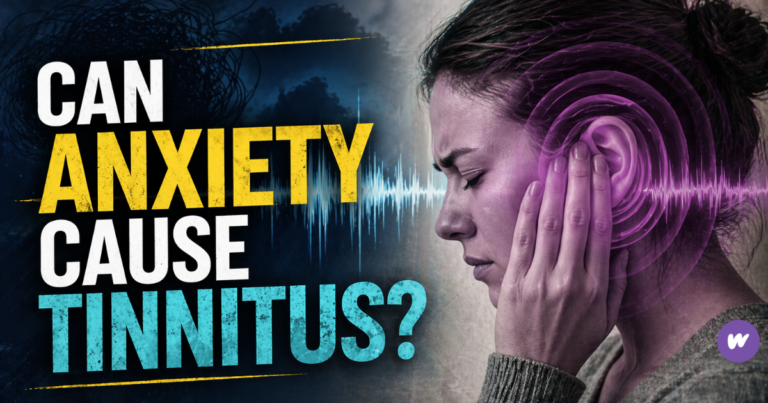
If you’ve ever noticed a persistent ringing, buzzing, or hissing in your ears during a particularly stressful period of your life, you’re not imagining it. The relationship between anxiety and tinnitus is real, well-documented, and more intertwined than most people realize. So, can anxiety cause tinnitus? The short answer is yes — and understanding how can be the first step toward finding relief.
What Is Tinnitus?
Tinnitus is the perception of sound — ringing, buzzing, whooshing, clicking, or hissing — when no external sound source is present. It affects an estimated 15–20% of people worldwide and can range from a mild background nuisance to a debilitating condition that disrupts sleep, concentration, and daily life.
Tinnitus is not a disease itself but a symptom — one that can stem from hearing loss, ear infections, loud noise exposure, certain medications, or, importantly, psychological conditions like anxiety and chronic stress.
The Anxiety-Tinnitus Link: How It Works
To understand how anxiety can cause or worsen tinnitus, you need to look at what happens inside your body when you’re anxious.
1. The Fight-or-Flight Response
When you experience anxiety, your nervous system triggers the fight-or-flight response, flooding your body with stress hormones like cortisol and adrenaline. This state causes heightened sensory awareness — your brain essentially turns up the volume on everything around you, including internal sounds. For some people, this amplification brings previously unnoticed sounds in the ears to the foreground, effectively creating tinnitus or making mild tinnitus suddenly unbearable.
2. Reduced Blood Flow
Anxiety causes blood vessels to constrict, reducing circulation throughout the body, including the delicate structures of the inner ear. The cochlea — the spiral-shaped organ responsible for translating sound vibrations into nerve signals — is exquisitely sensitive to blood flow. When circulation is compromised, auditory signals can become distorted, contributing to phantom sounds.
3. Muscle Tension
Chronic anxiety leads to persistent muscle tension, particularly in the jaw, neck, and shoulders. The temporomandibular joint (TMJ), located just in front of the ears, is closely connected to auditory function. Tension in this area can directly contribute to or worsen tinnitus symptoms.
4. Hypervigilance and the Brain’s Filter
Perhaps the most significant mechanism is neurological. The brain has a natural filtering system that suppresses irrelevant background sounds — including the faint internal noises the auditory system always produces. Anxiety disrupts this filter. When you’re anxious, your brain becomes hypervigilant, treating more sounds as potentially threatening. This means sounds that would otherwise be filtered out become consciously perceived. Once you notice tinnitus, anxiety makes it nearly impossible to ignore — creating a vicious cycle.
The Vicious Cycle: Tinnitus Feeding Anxiety
Here’s where it gets particularly challenging: tinnitus itself causes anxiety, and anxiety worsens tinnitus. Once this loop begins, it can be very difficult to break without targeted intervention.
Many tinnitus sufferers report that the more anxious they become about the ringing, the louder and more persistent it seems. Sleep deprivation caused by tinnitus leads to more anxiety, which in turn increases the perceived volume of the sound. Understanding this feedback loop is critical — because it means that treating the anxiety is often just as important as treating the tinnitus.
Risk Factors: Who Is Most Vulnerable?
Not everyone who experiences anxiety will develop tinnitus. Certain factors increase vulnerability:
- Pre-existing hearing loss — even mild, undiagnosed hearing loss makes tinnitus more likely under stress
- High-stress occupations — healthcare workers, first responders, and caregivers show elevated rates of both anxiety and tinnitus
- Generalized Anxiety Disorder (GAD) and PTSD are strongly associated with tinnitus onset and severity
- Poor sleep — a shared consequence of both anxiety and tinnitus that accelerates both conditions
- Noise exposure history — those previously exposed to loud environments have a lower threshold for tinnitus development under stress
What You Can Do: Managing Both Anxiety and Tinnitus
The good news is that because anxiety and tinnitus share the same feedback loop, addressing one often improves the other. Here are evidence-based approaches:
Cognitive Behavioural Therapy (CBT): CBT is the gold standard for both anxiety disorders and tinnitus distress. It helps reframe negative thought patterns about tinnitus, reducing the emotional response that fuels the cycle.
Mindfulness and Meditation: Mindfulness-based stress reduction (MBSR) has shown significant promise in reducing tinnitus-related distress. By training the brain to observe sensations without reacting, it weakens the anxiety-tinnitus loop.
Sound Therapy: White noise machines, nature sounds, or dedicated tinnitus masking apps can reduce the contrast between internal sounds and silence, making tinnitus less noticeable — particularly at night.
Physical Activity: Regular exercise is one of the most effective natural anxiolytics available. It regulates cortisol, improves sleep, and increases blood flow to the inner ear.
Limiting Stimulants: Caffeine and alcohol can both exacerbate anxiety and tinnitus. Reducing intake — especially in the evening — can make a meaningful difference.
Seek Professional Evaluation: If tinnitus is persistent, visit both an audiologist and a mental health professional. A proper diagnosis rules out other causes and opens the door to targeted treatment.
The Bottom Line
Can anxiety cause tinnitus? Absolutely. Through a combination of physiological changes, heightened sensory processing, and neurological hypervigilance, anxiety is both a trigger and amplifier of tinnitus. The relationship is bidirectional — each condition feeds the other — which is why a holistic approach that addresses both the mental and auditory dimensions is essential.
If you’re experiencing persistent ringing in your ears alongside stress or anxiety, know this: you are not alone, and you are not imagining it. With the right support and strategies, both conditions are manageable — and for many people, significantly improvable over time.
Always consult a qualified healthcare provider for a proper diagnosis and personalized treatment plan.